
Emperor Heraclius Slays the King of Persia
<p>This panel was probably part of an altarpiece dedicated to the Holy Cross, a relic that was much venerated in the Middle Ages. Through repeated retelling, its story took on some of the qualities of a chivalric romance. That story included the adventures of the Byzantine emperor Heraclius, who rescued the True Cross and returned it to Jerusalem after its capture by Chosroës, king of Persia.</p> <p>Here Heraclius defeats a king who is probably meant to be the son of Chosroës. The emperor can be identified by the closed imperial crown that caps his helmet, the double-headed eagle symbol on the trumpet and the trappings of his followers’ horses, and the fact that he is about to behead his opponent. This exciting narrative provides an excuse for a vivid display of armor and weaponry.</p>
Catalogue
- Year
- 1460
- Medium
- Tempera and oil on panel
- Dimensions
- 67.6 × 54.2 cm (26 5/8 × 21 5/16 in.)
- Collection
- Art Institute of Chicago
- Artist
- Netherlandish
Artist

Painting
Early Netherlandish painting is the body of work by artists active in the Burgundian and Habsburg Netherlands during the 15th- and 16th-century Northern Renaissance period, once known as the Flemish Primitives. It flourished especially in the cities of Bruges, Ghent, Mechelen, Leuven, Tournai and Brussels, all in present-day Belgium. The period begins approximately with Robert Campin and Jan van Eyck in the 1420s and lasts at least until the death of Gerard David in 1523, although many scholars extend it to the beginning of the Dutch Revolt in 1566 or 1568 – Max J. Friedländer's acclaimed surveys run through Pieter Bruegel the Elder. Early Netherlandish painting coincides with the Early and High Italian Renaissance, but the early period is seen as an independent artistic evolution, separate from the Renaissance humanism that characterised developments in Italy. Beginning in the 1490s, as increasing numbers of Netherlandish and other Northern painters traveled to Italy, Renaissance ideals and painting styles were incorporated into northern painting. As a result, Early Netherlandish painters are often categorised as belonging to both the Northern Renaissance and the Late or International Gothic.
Full artist profile →More
More by Netherlandish

Liberation of Saint Peter from Prison
1595 · Oil on panel
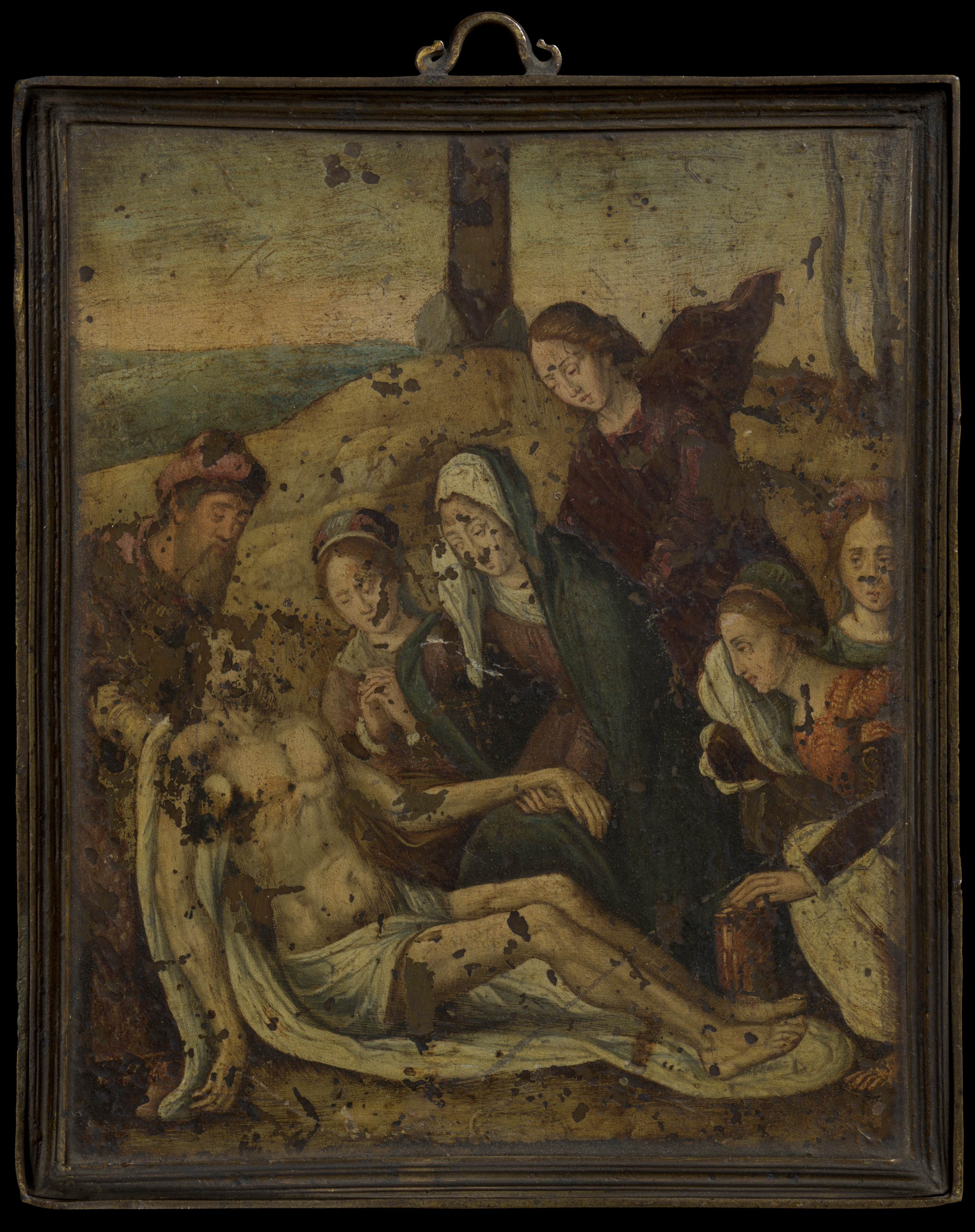
The Lamentation
1547 · Oil on copper alloy
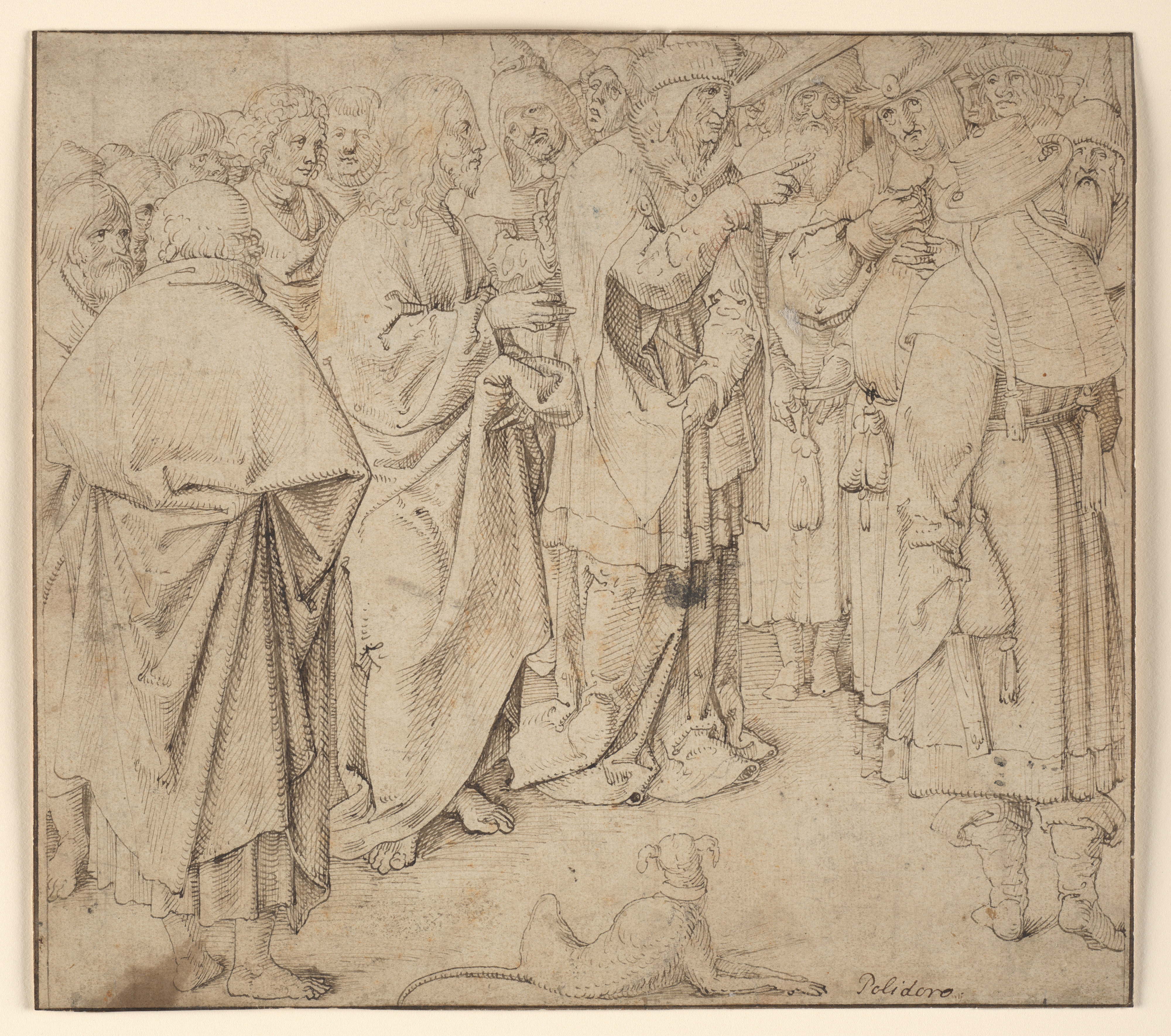
The Parable of the Beam and the Mote
1517 · Pen and brown ink over traces of black chalk; original borderlines at left and right edges.
Saint Andrew
1510 · oak with traces of paint

The Lamentation
1490 · Oil on panel

Christ Presented to the People
1475 · Oil on panel
Record
Verified by Watts Index- Artist
- Netherlandish
- Year
- 1460
- Medium
- Tempera and oil on panel
- Dimensions
- 67.6 × 54.2 cm (26 5/8 × 21 5/16 in.)
- Watts ID
- WW-1460-123975
Source
- Collection
- Art Institute of Chicago
- Source
- aic
- Reference
- View at source
- Status
- verified