
Courtesan Walking
<p>Woodblock prints are regarded as the most characteristic expression of the Japanese artistic genius. Great quantities of this popular art form, called <em>ukiyo-e</em> ("pictures of the floating world"), were made during the Edo period (1603-1868) and sold inexpensively to a pleasure-seeking public captivated by Kabuki theater, sumo wrestling, and the brothel districts. Prints such as Kaigetsudo's hand-painted Courtesan display a freedom and originality that were not possible in the rendering of tradition-bound religious images. The beautiful woman clutches her billowing kimono, which has been decorated with the words of a poem whose author is depicted in the lining.</p>
Catalogue
- Year
- 1709
- Dimensions
- 55.2 × 28.8 cm (21 3/4 × 11 3/8 in.)
- Collection
- Art Institute of Chicago
- Artist
- Kaigetsudo Anchi
Artist

Painting
Kaigetsudō Anchi was a Japanese artist of the Kaigetsudō school of ukiyo-e art. He was the student and likely the son of the school's founder, Kaigetsudō Ando.
Full artist profile →More
More by Kaigetsudo Anchi

Standing prostitute wearing a kimono with plum-blossom motif
1715

Standing Beauty
1709 · Woodblock print; sumizuri-e, kakemono-e
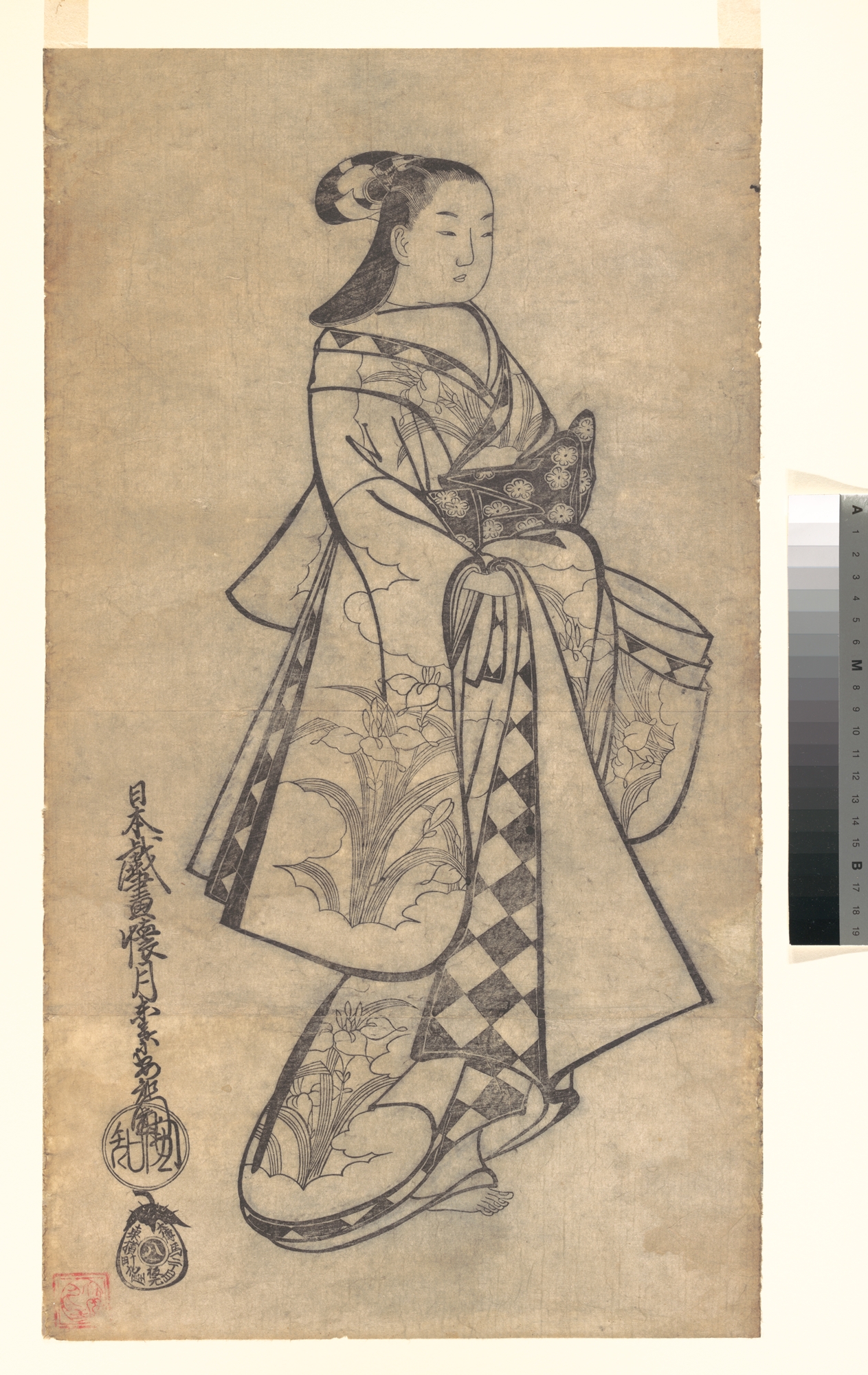
Courtesan
1704 · Monochrome woodblock print (sumizuri-e); ink on paper
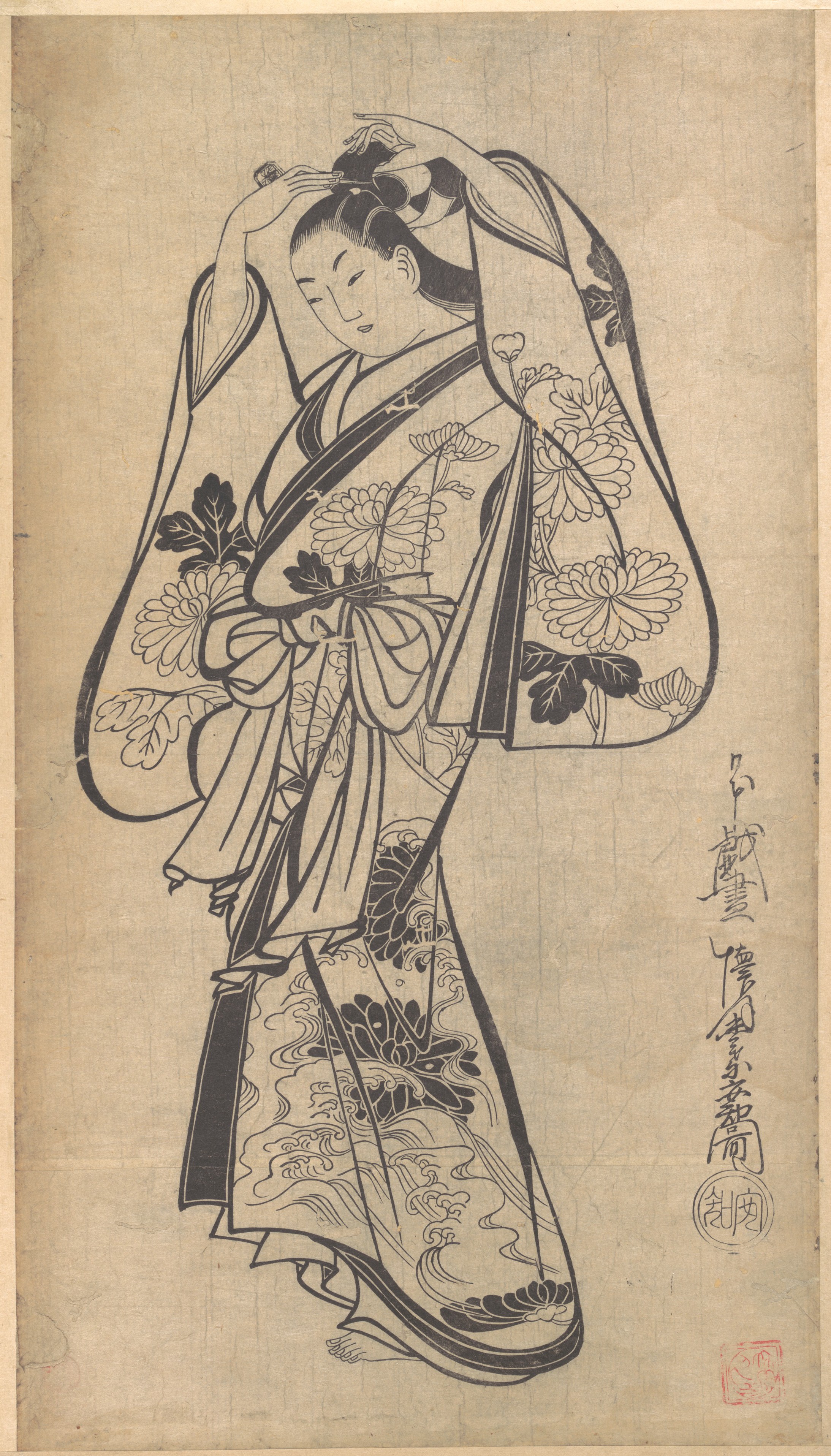
Courtesan Placing a Hairpin in Her Hair
1704 · Monochrome woodblock print (sumizuri-e); ink on paper
Record
Verified by WattsOS- Artist
- Kaigetsudo Anchi
- Year
- 1709
- Dimensions
- 55.2 × 28.8 cm (21 3/4 × 11 3/8 in.)
- Watts ID
- WW-1709-134203
Source
- Collection
- Art Institute of Chicago
- Source
- aic
- Reference
- View at source
- Status
- verified