
Draped Figure, Reclining
<p>As the current exhibition <em>Impressionism, Fashion, and Modernity</em> demonstrates, women in the late 19th century were regularly defined by their attire. Clothing, makeup, and accessories frequently reflected not only a woman’s social status but also her character and morality. Scholar Justine De Young has observed of the period, “Dressing fashionably and in good taste thus became one of the central concerns of a bourgeois woman’s daily life, as not merely her appearance but also her reputation was at stake.” The same strict rules of public presentation did not necessarily apply, however, to the private, domestic sphere—as the images in this gallery illustrate. Shown here are women in the process of dressing or undressing; relaxing in their underclothes, nightgowns, or morning dress; or in the most private of moments: sleeping or reclining nude. Henri de Toulouse-Lautrec’s print portfolio <em>Elles</em> most likely depicts prostitutes during the course of the day, but these prints could easily represent the interior life of any woman, as they illustrate common boudoir behaviors: the toilette, lounging in bed, grooming, and conversing with friends. Prints by Childe Hassam, Edvard Munch, James McNeill Whistler, and Paul Gavarni show women wearing peignoirs or dressing gowns. These garments were typically worn by upper class women while they went about their regular morning activities: attending to the servants or the children, catching up on reading and correspondence, and other routine household concerns.</p>
Catalogue
- Year
- 1892
- Dimensions
- Image: 18 × 25.8 cm (7 1/8 × 10 3/16 in.); With four registration marks and color notations: 21.8 × 28.5 cm (8 5/8 × 11 1/4 in.); Sheet: 27.8 × 36.7 cm (11 × 14 1/2 in.)
- Collection
- Art Institute of Chicago
- Artist
- James McNeill Whistler
Artist

Painting
James Abbott McNeill Whistler was an American painter in oils and watercolor, and printmaker, active during the American Gilded Age and based primarily in the United Kingdom. He eschewed sentimentality and moral allusion in painting and was a leading proponent of the credo "art for art's sake".
United Kingdom of Great Britain and Ireland
Full artist profile →More
More by James McNeill Whistler

Sheet of Stamps of Whistler's Mother
1934 · Uncut sheet of stamps in purple ink

The 26 Etchings (Second Venice set)
1924 · Bound volume of etchings and drypoints printed from original cancelled copper plates
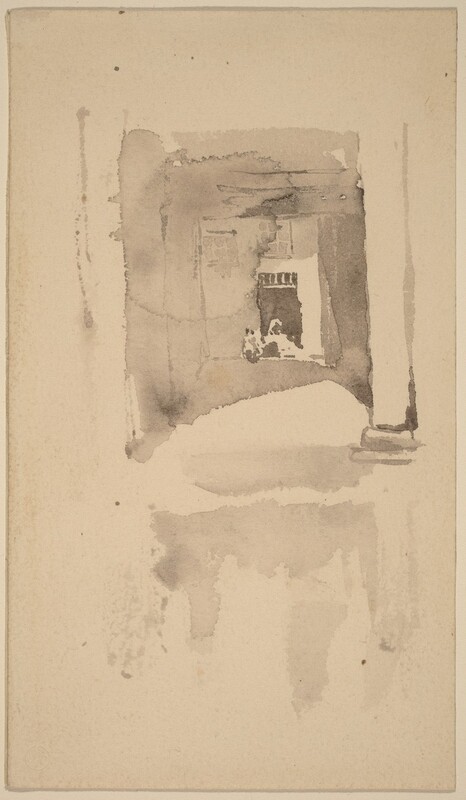
A Doorway in Ajaccio
1901 · brush and gray wash on wove paper

Bohemians
1901 · Etching with foul biting in black ink on ivory laid paper
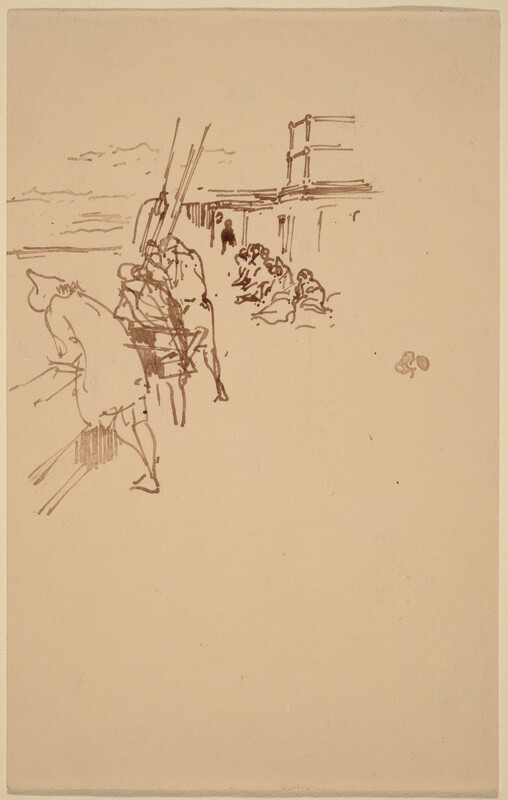
At Sea
1901 · pen and brown ink on wove paper

Flaming Forge
1901 · etching in dark brown on laid paper
Record
Verified by WattsOS- Artist
- James McNeill Whistler
- Year
- 1892
- Dimensions
- Image: 18 × 25.8 cm (7 1/8 × 10 3/16 in.); With four registration marks and color notations: 21.8 × 28.5 cm (8 5/8 × 11 1/4 in.); Sheet: 27.8 × 36.7 cm (11 × 14 1/2 in.)
- Watts ID
- WW-1892-015435
Source
- Collection
- Art Institute of Chicago
- Source
- aic
- Reference
- View at source
- Status
- verified