Database / Artworks
Artworks
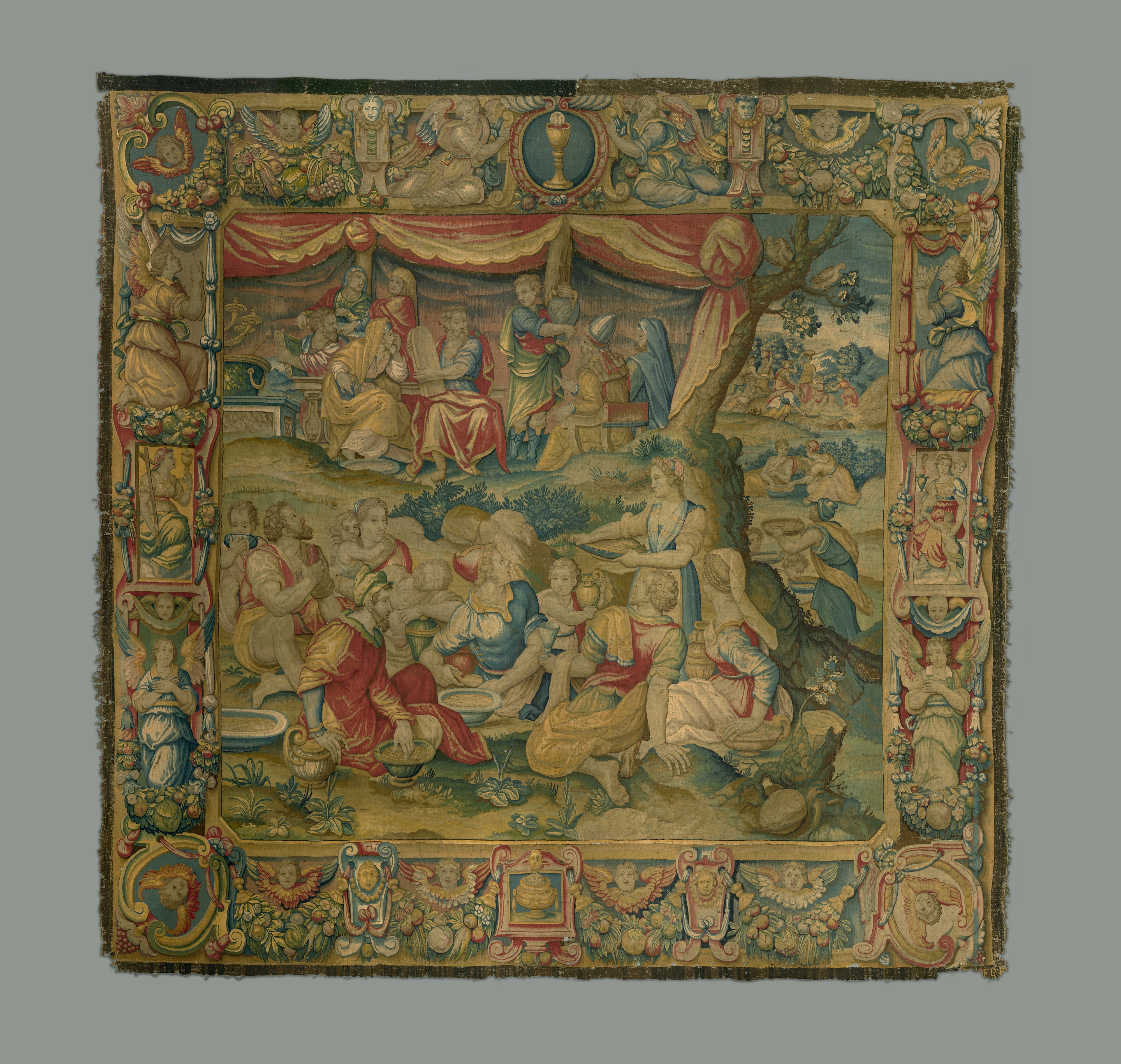
The Gathering of Manna
Alessandro Allori
Wool and silk · 1595
The Metropolitan Museum of Art

Diana and Her Nymphs with the Ox Hunt
Hans Bol
Wool and silk, slit and double interlocking tapestry weave
Warp: Count: 6–7 warps per cm; wool: S-ply of three Z-spun elements; diameters: 0.8–1.0 mm
Weft: Count: varies from 20 to 34 wefts per cm; wool: S-ply of two Z-spun elements; diameters: 0.3–1.1 mm; silk; S-ply of two Z-twisted elements; pairs of S-ply of two Z-twisted elements; three yarns of S-ply of two Z-twisted silk elements; diameters: 0.7–1.2 mm · 1590
Art Institute of Chicago

Venus and Adonis (?) with the Duck Hunt
Jacques Geubels, I
Wool and silk, slit and double interlocking tapestry weave
Warp: Count: 7 warps per cm; wool: S-ply of three Z-spun elements; diameters: 0.7–0.9 mm
Weft: Count: varies from 17 to 30 wefts per cm; wool: S-ply of two Z-spun elements; pairs of S-ply of two Z-spun elements; diameters: 0.5–1.2 mm; silk: pairs of S-ply of two Z-twisted elements; diameters: 0.5–1.2. mm · 1590
Art Institute of Chicago

Pluto and Proserpina with Falconry
Erasmus de Pannemaker, I
Wool and silk, slit and double interlocking tapestry weave
Warp: Count: 6 warps per cm; wool: S-ply of three Z-spun elements; diameters: 0.7–0.9 mm
Weft; Count: varies from 19 to 60 wefts per cm; wool: S-ply of two Z-spun elements; diameters: 0.4–1.5 mm; silk; S-ply of two elements with no appreciable twist; paired elements with no appreciable twist; diameters: 0.3–1.0 mm · 1590
Art Institute of Chicago
![Alexander Kneeling before Jaddus at the Gates of Jerusalem [left section] from The Story of Alexander the Great](https://www.artic.edu/iiif/2/aaefeacf-62ef-16dc-4ca5-e87262844017/full/843,/0/default.jpg)
Alexander Kneeling before Jaddus at the Gates of Jerusalem [left section] from The Story of Alexander the Great
Nicolaas van Orley
Wool and silk; slit, dovetailed, and double interlocking tapestry weave
Warp: Count; 6 warps per cm; wool: S-ply of three Z-spun elements; diameter: 1.5 mm
Weft: Count: varies from 17 to 28 wefts per cm; wool; S-ply of two Z-spun elements; pairs of S-ply ol two Z-spun elements; diameters: 0.5–1.5 mm; silk: S-ply of two Z-twisted elements; pairs of S-ply of two Z-twisted elements; diameters: 0.35–1.0 mm; wool and silk: paired yarns of S-ply of two Z-spun wool elements and S-ply of two Z-twisted silk elements; diameter: 0.8 mm · 1590
Art Institute of Chicago
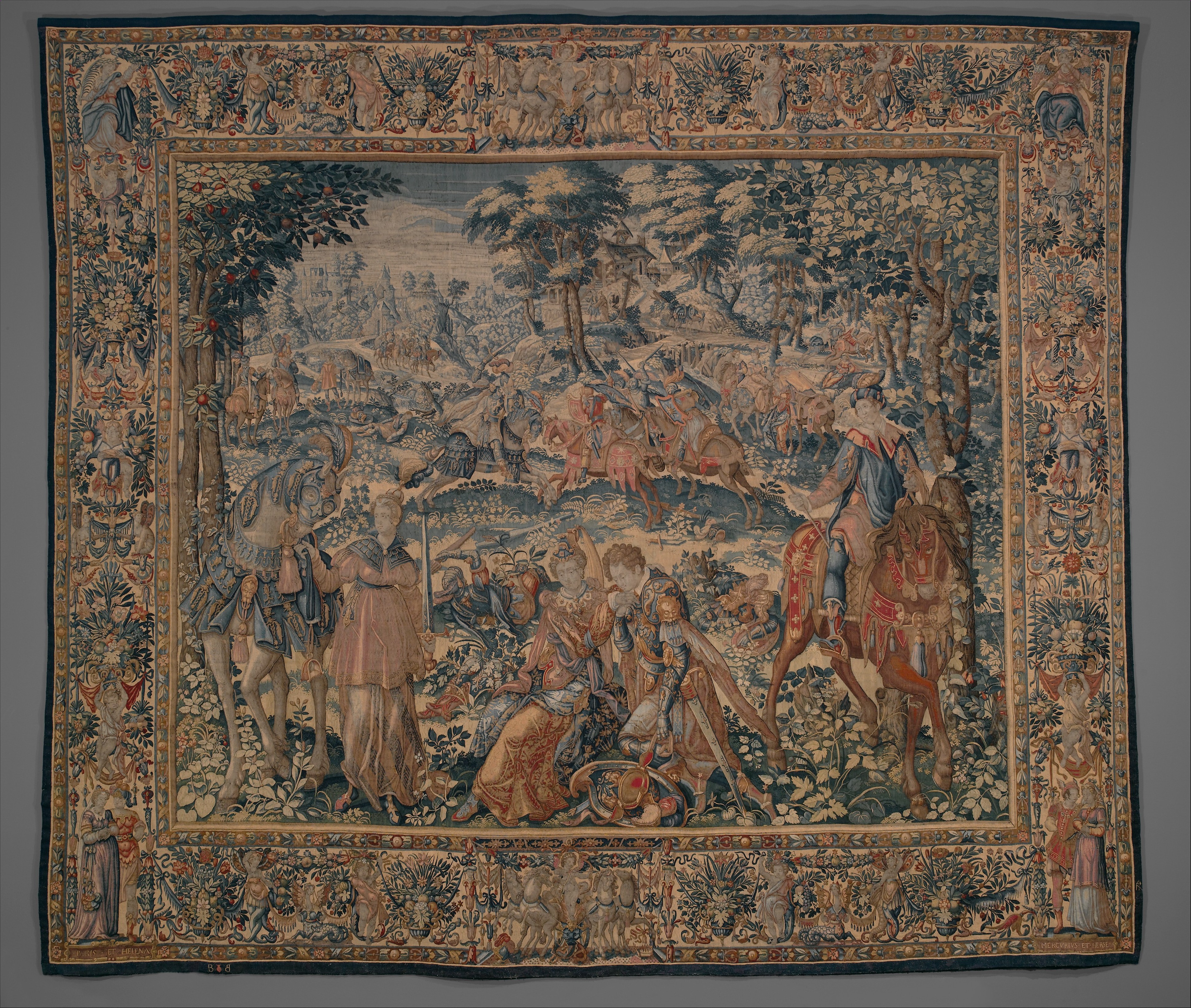
The Liberation of Oriane from a set of Amadis of Gaul
Karel van Mander II
Wool and silk (8-9 warps per cm) · 1585
The Metropolitan Museum of Art

Pillow cover
Sheldon Tapestry Factory
woven textiles, pillow cover — medium: wool, silk technique: tapestry woven · 1570
Cooper Hewitt, Smithsonian Design Museum
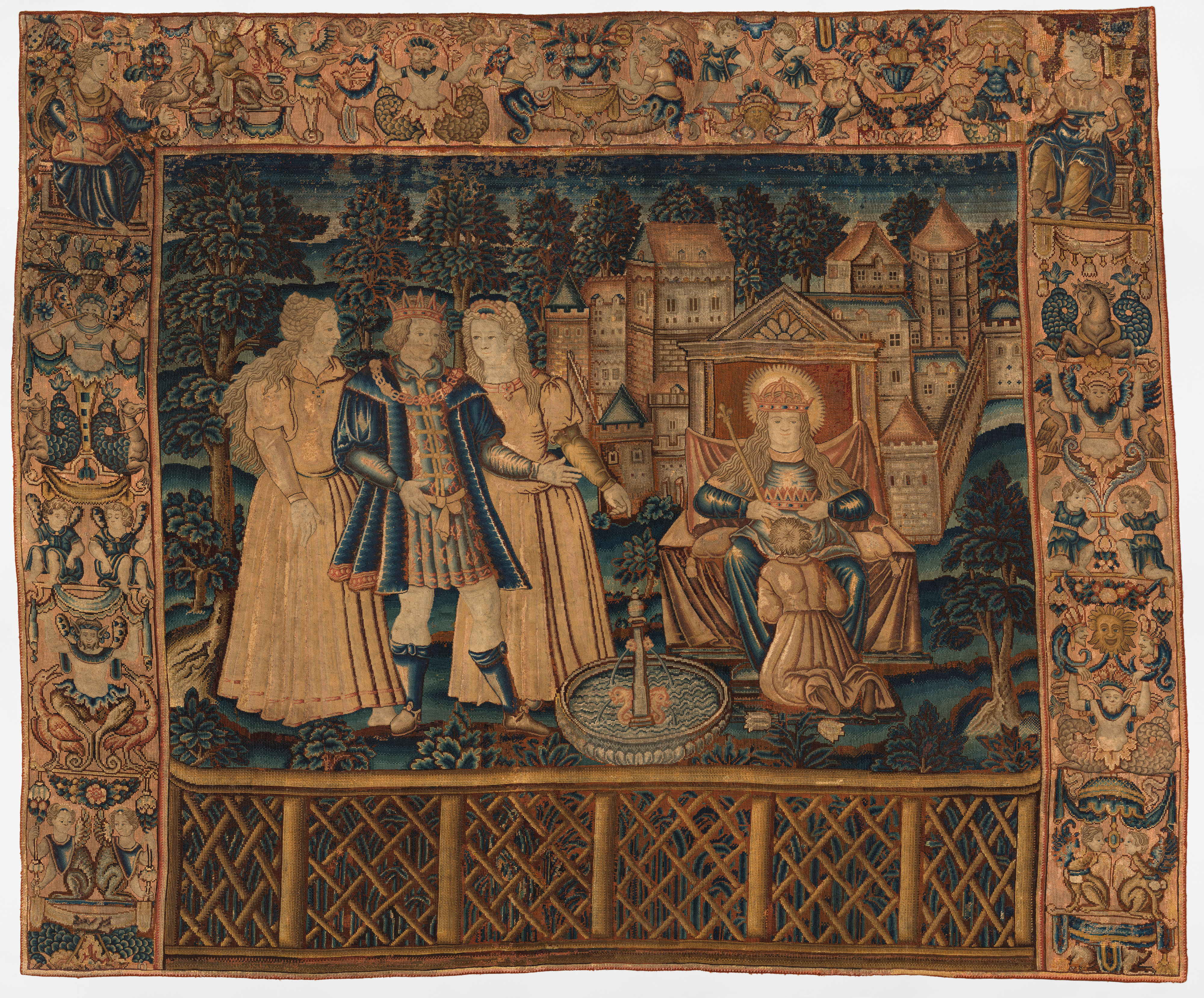
The Wayfarer Crowned by Happiness from The Table of Cebes
David Kandel
Wool and silk on canvas (cross-stitch, 48-56 per sq. in., 9 per sq. cm.; tent stitch, 156-190 per sq. in., 30-36 per sq. cm.) · 1550
The Metropolitan Museum of Art
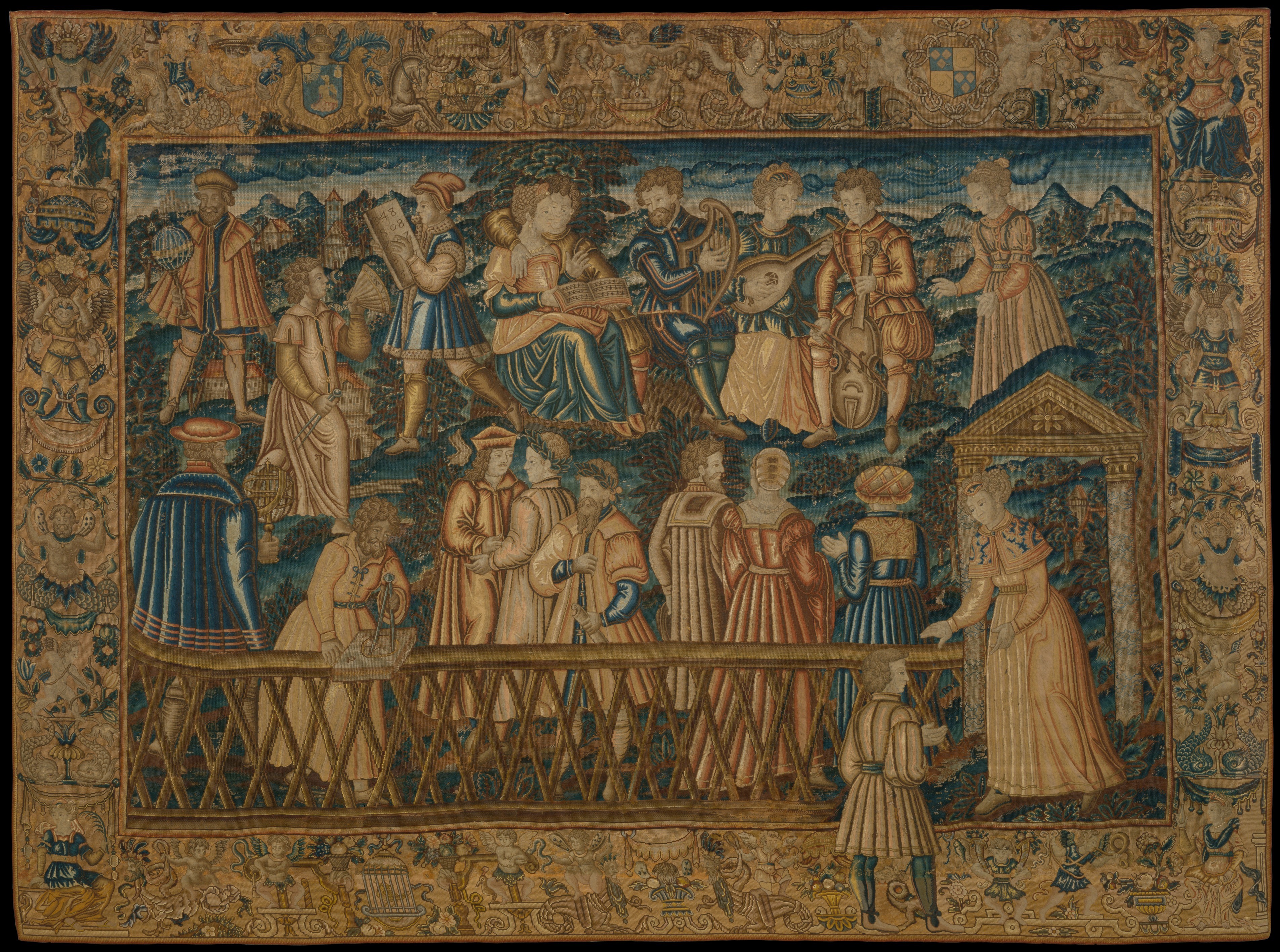
The Garden of False Learning from The Table of Cebes
David Kandel
Wool and silk on canvas (cross stitch, 48-56 per sq. in., 9 per sq. cm; tent stitch, 156-190 per sq. in., 30-36 per sq. cm.) · 1550
The Metropolitan Museum of Art

Tapestry with the arms of Emperor Charles V
Willem de Pannemaker
tapestry on silk, silver thread, wool, gold thread · 1540
Rijksmuseum

Christ Appearing to Mary Magdalene (Noli Me Tangere)
Willem de Pannemaker
Wool and silk; slit, single, and double interlocking tapestry weave
Warp: Count: 8 warps per cm; wool: S-ply of three Z-spun elements; diameters: 0.7–0.85 mm
Weft: Count: varies from 32 to 56 wefts per cm; wool: S-ply of two Z-spun elements; diameters: 0.3–0.85 mm; silk: pairs of S-ply of two Z-twisted elements; diameters: 0.4–0.8 mm · 1540
Art Institute of Chicago

Fragment from the Topacu Waistband of a Tunic (Uncu)
Inca
Cotton and wool (camelid), single interlocking tapestry weave with eccentric wefts · 1532
Art Institute of Chicago

Coca Bag
Inca
Cotton and wool (camelid), slit tapestry weave with bands of two-color complementary weft plain weave with three-span floats; joined with wool (camelid) in cross-knit loop and overcast stitches · 1532
Art Institute of Chicago

Fragment from the Shoulder of a Tunic (Uncu)
Inca
Cotton and wool (camelid), single interlocking tapestry weave with eccentric wefts · 1532
Art Institute of Chicago
Fragment from the Topacu Waistband of a Tunic (Uncu)
Inca
Cotton and wool (camelid), single interlocking tapestry weave with eccentric wefts · 1532
Art Institute of Chicago

Prudentia (Prudence) from Los Honores
Bernard van Orley
Wool and silk; slit, dovetailed, and double interlocking tapestry weave
Warp: Count: 7–8 warps per cm; wool: S-ply of three Z-spun elements; diameters: 0.5–1.0 mm
Weft: Count: varies from 16 to 32 wefts per cm; wool: S-ply of two Z-spun elements; diameters: 0.4–1.0 mm; silk: S-ply of two Z-twisted elements (maybe replacement wefts); diameters: 0.4–0.9 mm.
Right half of piece was rewoven. · 1525
Art Institute of Chicago

Prudentia (Prudence) from Los Honores
Bernard van Orley
Wool and silk; slit, dovetailed, and double interlocking tapestry weave
Warp: Count: 7–8 warps per cm; wool: S-ply of three Z-spun elements; diameters: 0.5–1.0 mm
Weft: Count: varies from 16 to 32 wefts per cm; wool: S-ply of two Z-spun elements; diameters: 0.4–1.0 mm; silk: S-ply of two Z-twisted elements (maybe replacement wefts); diameters: 0.4–0.9 mm.
Right half of piece was rewoven. · 1525
Art Institute of Chicago

Justitia (Justice) from Los Honores
Bernard van Orley
Wool and silk, slit and dovetailed tapestry weave
Warp: Count: 6 warps per cm; wool: S-ply of three Z-spun elements; diameters: 0.4–0.7 mm
Weft: Count: varies from 16 to 38 wefts per cm; wool: S-ply of two Z-spun elements; pairs of S-ply of two Z-spun elements; paired yarns of S-ply of two Z-spun elements and a single Z-spun element; diameters: 0.4–1.5 mm; silk: S-ply of two Z-twisted elements (may be replacement wefts); diameters: 0.4–1.0 mm; wool and silk; paired yarns of S-ply of two Z-spun wool elements and S-ply of two Z-twisted silk elements; diameters: 1.0–1.4 mm.
Three-quarters of piece rewoven · 1520
Art Institute of Chicago

Justitia (Justice) from Los Honores
Bernard van Orley
Wool and silk, slit and dovetailed tapestry weave
Warp: Count: 6 warps per cm; wool: S-ply of three Z-spun elements; diameters: 0.4–0.7 mm
Weft: Count: varies from 16 to 38 wefts per cm; wool: S-ply of two Z-spun elements; pairs of S-ply of two Z-spun elements; paired yarns of S-ply of two Z-spun elements and a single Z-spun element; diameters: 0.4–1.5 mm; silk: S-ply of two Z-twisted elements (may be replacement wefts); diameters: 0.4–1.0 mm; wool and silk; paired yarns of S-ply of two Z-spun wool elements and S-ply of two Z-twisted silk elements; diameters: 1.0–1.4 mm.
Three-quarters of piece rewoven · 1520
Art Institute of Chicago

Carrying Cloth
Inca Culture
Double cloth; edges embroidered with wool yarn; braided straps at each corner ending in tassels · 1476
Art Institute of Chicago

Poncho
Chuquibamba
Wool (camelid), interlocking tapestry weave with inserts of complementary weft weave · 1476
Art Institute of Chicago

Fragment (Tunic)
Inca
Cotton and wool (camelid), slit and single interlocking tapestry weave with eccentric wefts · 1476
Art Institute of Chicago

Fragment
Chuquibamba
Wool (camelid), interlocking tapestry weave with inserts of complementary weft weave · 1476
Art Institute of Chicago

Fragment
Chuquibamba
Wool (camelid), interlocking tapestry weave with inserts of complementary weft weave · 1476
Art Institute of Chicago