The amazing story of Three Chimneys, the UIA World Congress of Architects 2026 venue
By Suzanne Wales
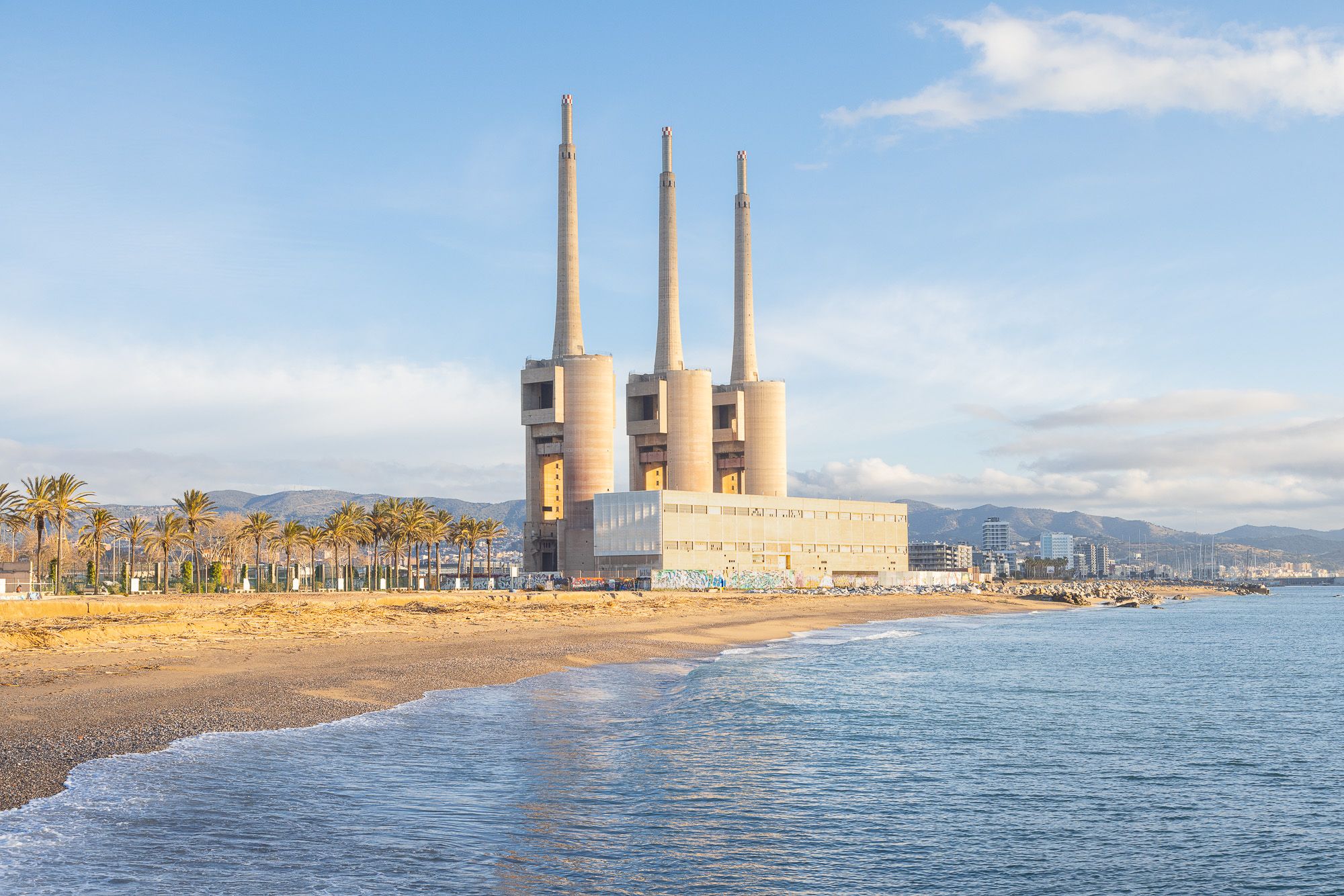
Barcelona's iconic Tres Xemeneies (Three Chimneys) thermal power plant - celebrated by architecture enthusiasts for its brutalist architecture silhouette and enjoyed by locals for the clandestine nudist beach at its feet- is carving out a new place on the city's cultural agenda. A major transformation into a media hub is set to follow.
It has been 15 years since Three Chimneys ceased operations, abandoned by Spain's national power company as its infrastructure became obsolete and its environmental impact increasingly untenable. Since then, the complex has become a symbol of an earlier Barcelona, before the city's transition towards renewable energy and legislation that curtailed development along the coastline.
Its three 200-metre-high, sand-coloured chimneys rising against the Mediterranean are often the first landmark seen by visitors arriving by air. In recent years, events including the Manifesta Biennial, open-air cinema screenings and, most recently, an exhibition responding to the themes of the 2026 UIA World Congress of Architects have drawn curious visitors to the site. For the most part, however, it has remained an extraordinary urban void.
Architecture practices MARVEL and Garcés de Seta Bonet Arquitectes have been commissioned to transform the complex into Catalunya Media City, a major hub for research, education, exhibitions and congresses. Recognising that Three Chimneys is Barcelona's defining industrial landmark, the architects aim to preserve as much of the existing structure as possible while opening the site to the public with new green spaces, pedestrian promenades and direct access to the beach.
A new transparent rectangular volume will extend south from the turbine hall towards the sea, accommodating the site's new programme while leaving the historic structure largely intact. Strategic cuts through the existing building will improve circulation and strengthen the relationship between old and new. Jordi Garcés, co-founder of Garcés de Seta Bonet Arquitectes, explained: 'We have designed a proposal that works through connections and knots, temporal, landscape and territorial.'
The project also follows passive design principles. Energy generation will come from 4,500 square metres of rooftop solar panels, while the north-facing façade will incorporate terraces and balconies overlooking the River Besòs and neighbouring Badalona. 'These architectural elements at different heights will offer new perspectives of the city,' stated Garcés. 'As if it were a piece of land art.'
Receive our daily digest of inspiration, escapism and design stories from around the world direct to your inbox.
This article was originally published by Wallpaper*.