12 Burgers, 10 Snapper Crudos, 1 Rabbit: These Are the Rarest Dishes in New York
By By Karly Quadros
In New York, a discerning diner with enough cash, determination, and Resy savvy can get their hands on virtually any reservation. But if a coveted table is not enough to sate your appetite for exclusivity, never fear. Some of the city’s most beloved restaurants offer another layer of scarcity: dishes that are available to only a handful of people each night.
Some, like Raoul’s burger, are not even on the menu. Others, like Dhamaka’s whole wild rabbit, are so labor-intensive that only one is made available at each service. Refreshingly, in a restaurant scene that’s become dizzyingly unaffordable, it’s not an exorbitant price that distinguishes this rare breed of dish—many are in the $20 to $30 range, with an exception for the aforementioned lapin ($250)—but rather time, ingredients, and reputation.
Why, exactly do these restaurants offer their prize dishes to just a select few? The explanations, as it turns out, are as multifarious as the types of restaurants in the city.
For some restaurants, low dish counts reflect the low availability—or appeal—of specialized ingredients, especially those less familiar to American palettes. Mam in the Lower East Side offers 12 orders a night of bò lá lốt mỡ chài, a beef sausage encased in the tender net of caul fat. It’s not particularly expensive—the dish will run diners $32 a pop. But while caul fat is fairly common in East Asian cuisines, it’s used with less frequency in the West, and it can be hard for chefs to source.
“We’re not just trying to do something different. There’s a purpose to it,” says Chef Jerald Head. “We cook Vietnamese food for Vietnamese people, so we try to source authentic ingredients. It’s a trip back home.”
Seafood, as one of the ingredients with the shortest shelf life, inspires a scramble for the highest-quality bite. Theodora serves up a mere seven cuts of precious dry-aged tuna steak a few nights out of the week. For Penny chef Forrest Florsheim, acquiring the restaurant’s rare red Mangrove snapper is a near-Olympic level competition; he’s in constant contact with reps over the phone to track down the freshest seafood. Part of the motivation is practical—the restaurant doesn’t have a walk-in fridge and seafood is best fresh—but there’s also the benefit of having the best the city can offer.
“There’s been times where I’m like, I don’t want to post this on social media because I don’t want people to know about this and try to get it. I just want the exclusive line on it for New York,” says Florsheim.
Then, there are dishes whose number is constrained by a labor-intensive process. Take, for instance, the whole rabbit (khad khargosh) from the vibrant Indian canteen, Dhamaka, tucked inside Essex Market. Not only is there only one offered per night (the six pound beast comfortably serves four), but hungry diners must order two days in advance. (Chef Chintan Pandya and the team behind Dhamaka has made these types of meals something of a specialty—their sister restaurant Adda has inspired headlines and countless Reddit threads for its experiential butter chicken meal, which is only available six a night.)
Perhaps the reigning rare food du jour in this city is also one of the most common: a bar burger. Over 10 years ago, Raoul’s began slinging its famed bar-only, off-menu burger as a counterpart to its bar steak. Within weeks, Grub Street founder Joshua Ozersky declared it the hottest patty in town, and in short order, crowds began to eagerly queue up outside, hoping for their chance to taste the pepper au poivre sauce. But the 12-burger count had a simpler, sillier justification than many other rare dishes: the bakery where chef David Honeysett bought the buns sold them in packs of 12.
The instant success of Raoul’s burger inspired a slew of others. Lord’s offers 12 burgers each night inspired by Welsh rarebit, an astonishing slosh of sauce made from ale and melted cheese. Le Dive, Forgione, and Le B. all also boast similar bar burgers, while Crane Club only offers theirs for the skint slice of time between 5:30 and 6 p.m. As with a happy hour, these rarely available dishes are especially effective at getting bodies in the door during the slow hours of the early evening. The scarcity has a way of making a meal exciting, even if it’s for something otherwise humble and ubiquitous.
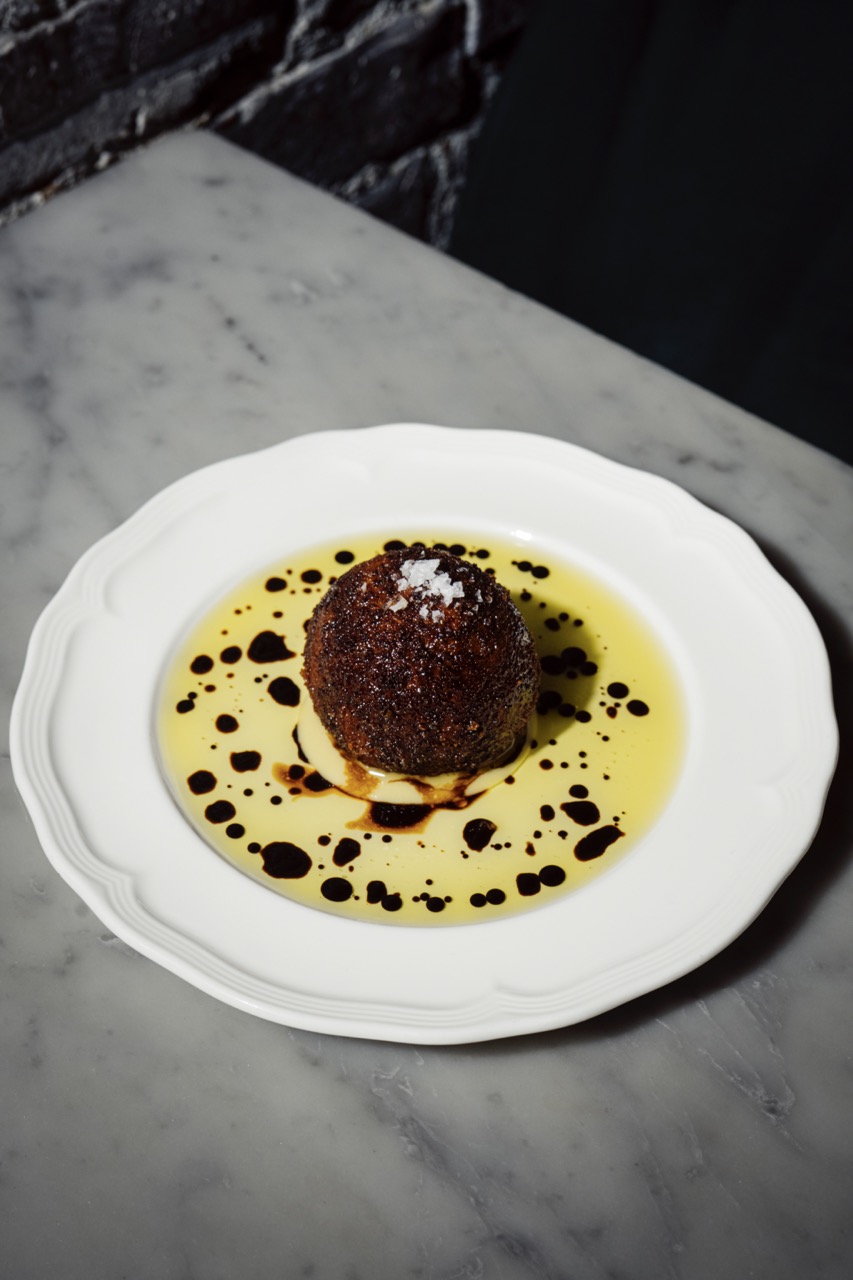
Above all, chefs underscored the sense of community that forms around these blink-and-you’ll-miss-them dishes. That’s at the heart of Forsythia’s polpetta, a short rib meatball served atop potato leek purée. The recipe came to chef Jacob Siwak by way of a Roman trattoria where he trained and graced the opening menu of the restaurant. “We have an enormous amount of regulars at Forsythia, and we wanted to keep something that a lot of those regulars loved, but we also didn’t want it to get in the way of new things,” he says. “It’s taken on this new form as the thing that people book early to come and eat.”
In a city where money can buy you almost anything, these rare dishes require insider knowledge and commitment. Here’s what you need to know about some of the city’s most exclusive, indulgent offerings.
Dish: Braised short rib polpette atop potato-leek purée with 25-year-aged balsamic vinegar
Cost: $24
Nightly Count: 5
Rarest Ingredient: Trucioleto, red wine vinegar from Emilia-Romagna
The Story Behind It: Forsythia chef Jacob Siwak based his polpette on one he used to prepare at a trattoria in Rome named Santo Palato. The Forsythia version graced the restaurant’s menu for the first year and a half it was open. Now off-menu, regulars know to ask for it by name.
Dish: Mangrove snapper crudo with confit rhubarb and fava bean wasabi dressing
Cost: $28
Nightly Count: 10
Rarest Ingredient: Omakase-grade red snapper plucked from the Gulf of Mexico
The Story Behind It: Chef Forrest Florsheim could only serve a fish fresher if it arrived impaled on the spear of the lone Florida fisherman who caught it. It’s seasonal, so if you miss out, you can always try for the lobster, which is available year-round. But good luck—the kitchen only cooks eight of those to order each night and they sell out so fast that the shellfish never even see the fridge.
Dish: Whole wild rabbit (khad khargosh)
Cost: $250
Nightly Count: 1
Rarest Ingredient: Homemade garam masala, which marinates in yogurt and mustard oil with the rabbit overnight
The Story Behind It: Why do you have to pre-order this dish? Because it takes 48 hours to prepare. Adapted by chef Chintan Pandya from a traditional Rajasthani hunting method, the team at the Lower East Side restaurant roasts the meat low and slow over open fire pits for hours.
Dish: Black-peppercorn-encrusted brisket burger with Saint-André cheese, watercress salad, and pommes frites
Cost: $34
Nightly Count: 12
Rarest Ingredient: Cream and cognac au poivre sauce
The Story Behind It: Only available at the bar and never gracing the menu, the SoHo bistro’s pub burger has become the stuff of legend. When it was introduced more than a decade ago, Josh Ozersky swiftly declared it the best burger in America. With customers queuing up as early as 4 p.m. to get a taste, Raoul’s sells out of them faster than chef David Honeysett can sear them.
More of our favorite stories from CULTURED
The 2026 Young Activists List: Meet 13 Change Agents Nominated by Gloria Steinem, Stacey Abrams, and More
An Exclusive Look Inside the Property That Houses Jorge M. Pérez’s Sweeping Art Collection
How Lillian Bassman’s Groundbreaking Career Reinvented Fashion Photography
Here’s All the Must-See TV Streaming in July
Peak Summer Is Here. Skip the Stove With These Dishes Best Served From the Fridge.
Sign up for our newsletter here to get these stories direct to your inbox.
Sign up for a digital subscription, starting at less than $3 a week.
Sign up for a digital subscription, starting at less than $2 a week.
You’re approaching your limit of complimentary articles. For expanded access, become a digital subscriber for less than $3 a week.
For less than the price of a cocktail, you can help independent journalism thrive.
For less than the price of a cocktail, you can help independent journalism thrive.
You’re approaching your limit of complimentary articles. For expanded access, become a digital subscriber for less than $3 a week.
For less than the price of a cocktail, you can help independent journalism thrive.
Support independent criticism for $10/month (or just $110/year).
This article was originally published by Cultured Magazine.